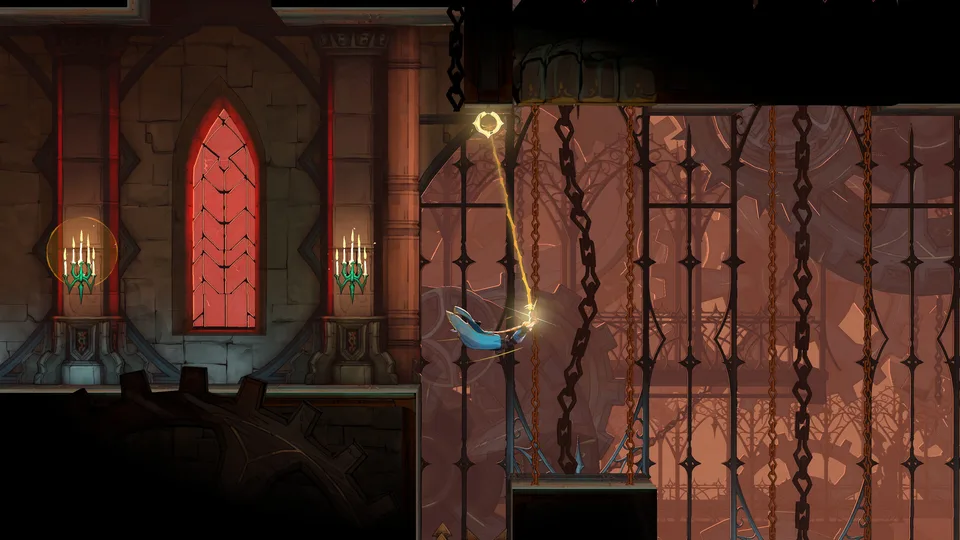
Vampire hunters diving into KONAMI's latest gothic platformer often wonder how castlevania belmont's curse steam deck performance holds up during intense exploration. Evaluating castlevania belmont's curse steam deck performance is vital because portable hardware requires precise optimization to deliver smooth side-scrolling action. Without proper configuration, players face unexpected hurdles that impact the overall adventure.
When the title launched alongside its digital demo, early testers noticed that the game made a rough first impression on portable devices. According to community reports and technical breakdowns from gaming outlets like [RPG Site](https://www.rpgsite.net/feature/21548-castlevania-belmont's curse-steam-deck-recommended-settings-full-game-rog-ally-fix-msi-claw-onexplayer-3), hardware scaling requires manual intervention. Addressing these technical roadblocks ensures that fans of classic action-platformers can enjoy fluid combat without frustrating stutters or visual glitches.
Graphics Settings and Resolution Challenges
Navigating the PC graphics menu reveals a modest set of options, which directly influences castlevania belmont's curse steam deck performance. Players can toggle window modes, adjust resolutions from 720p up to 4K, manage V-Sync, and alter frame rate caps ranging from 30 FPS to unlimited. However, standard anti-aliasing choices like FXAA and SMAA are accompanied by a currently bugged third option.
Display and Resolution Options
The game supports multiple window modes and aspect ratios, though non-standard displays such as 16:10 or 21:9 frequently suffer from cropped gameplay areas unless forced manually through system settings.
Frame Rate and V-Sync Controls
Internal frame limiters can occasionally cause adverse effects on frame times. Community feedback recommends utilizing external frame limiters to maintain consistent pacing across various PC handheld architectures.
The following table outlines the primary graphics settings available in the PC build and their impact on portable systems:
Setting Category
Available Options
Recommended for Portable Play
Notes
Resolution
720p, 1080p, 1440p, 4K
720p or 1080p
Forcing these resolutions prevents screen cropping on 16:10 displays.
Anti-Aliasing
FXAA, SMAA, Bugged Option
FXAA or SMAA
FXAA helps mitigate minor frame drops during heavy zoom-out sequences.
V-Sync
On / Off
Off (with external limiter)
Helps stabilize frame pacing and reduces input latency on handhelds.
Technical Analysis of Handheld Performance
Player experience indicates that running the game on Valve's portable hardware out of the box creates immediate scaling issues. The image frequently appears zoomed in, cutting off crucial left and right visual elements. To correct this, users must manually force the system to process the title at 720p or 1080p before fine-tuning the in-game display parameters.
Furthermore, testing across multiple Proton experimental builds and stable operating system channels reveals inconsistent frame pacing. Even when tweaking GPU clock speeds or power limits, the hardware struggles to maintain a locked 60 FPS during chaotic combat encounters. This contrasts sharply with alternative handheld devices, making castlevania belmont's curse steam deck performance a frequent topic of debate among enthusiasts.
Force the portable system display resolution to 720p or 1080p via the compatibility menu.
Launch the application and navigate to the display settings to match the forced resolution.
Disable the internal frame limiter and apply an external tool to stabilize frame times.
Comparing Handheld Ecosystems
Evaluating how different portable platforms handle KONAMI's release provides valuable context for players deciding where to purchase and play. While Valve's device requires workarounds and patience, competitors like the ROG Ally and Intel-powered handhelds deliver vastly different technical results out of the box.
Warning
ROG Ally units may launch into a black screen upon initial startup. Players can instantly resolve this by lowering the display refresh rate to 120Hz or below within the quick access menu.
The comparison below highlights how different portable architectures stack up in terms of resolution output, frame rates, and initial setup requirements:
Platform / Device
Target Resolution
Average Frame Rate
Initial Setup Requirement
Steam Deck (LCD/OLED)
720p / 1080p
45 - 60 FPS (Inconsistent)
Requires forced resolution and external frame limiting.
ROG Ally (Z1 Extreme)
1080p
65 - 110 FPS (Stable)
Requires refresh rate adjustment to bypass black screen bugs.
MSI Claw & OneXPlayer
1080p
90 - 144+ FPS (High)
Operates smoothly at standard TDP profiles with minor room-transition quirks.
Community Recommendations and Future Patches
Given the current optimization state, many community members advise waiting for official software patches before committing to a full playthrough on Valve's portable platform. Because side-scrolling action titles demand precise timing and responsive inputs, sudden hitching or unpredictable frame dips can severely hinder the experience.
Developer updates from KONAMI and Evil Empire will likely address these hardware bottlenecks in future hotfixes. Until comprehensive optimization patches arrive, players seeking a seamless portable experience may want to explore alternative PC handhelds or wait for dedicated console enhancements.
Tip
Keep your operating system and Proton compatibility layers updated. Community contributors frequently share custom configuration profiles that improve battery efficiency and reduce frame stuttering.
Frequently Asked Questions
Does Castlevania Belmont's Curse run at a stable 60 FPS on Steam Deck?
No, current testing demonstrates inconsistent frame rates and occasional stuttering during intense combat and room transitions, making castlevania belmont's curse steam deck performance less reliable than on other PC handhelds.
How do I fix the cropped screen issue on my portable device?
You can resolve screen cropping by forcing your system resolution to 720p or 1080p in the compatibility settings and matching that resolution inside the game's display menu.
Are there graphics settings to improve performance?
The game features limited display options including resolution scaling, window modes, and anti-aliasing toggles, but lacks advanced upscaling features to boost frame rates on lower-end hardware.
Should I wait for a patch before playing on portable hardware?
Based on current player feedback and technical reviews, waiting for developer patches is strongly recommended if you wish to avoid inconsistent frame timing and input latency during fast-paced platforming sequences.